
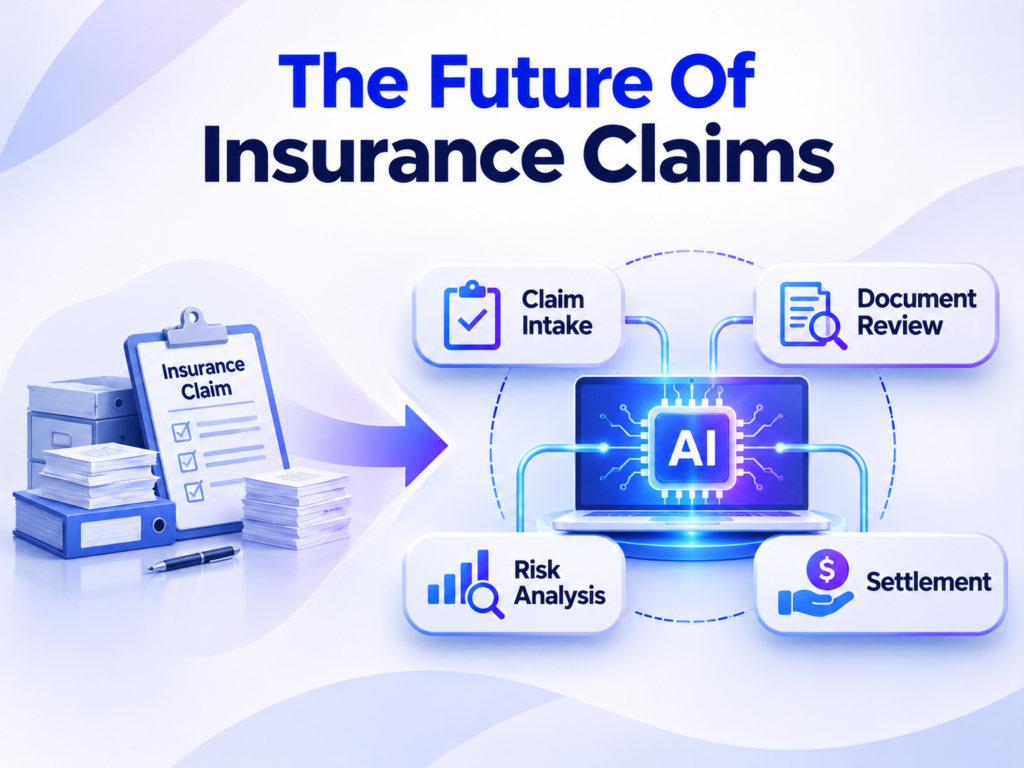
Introduction
Insurance claims processing has traditionally depended on manual work, multiple approval stages, and information spread across different systems. Claims teams often need to collect forms, verify policy details, review supporting documents, coordinate with assessors, and communicate updates to policyholders. When these activities rely heavily on emails, spreadsheets, and disconnected applications, even straightforward claims can take longer than expected.
As claim volumes, customer expectations, and operational costs increase, insurers are rethinking how claims are managed. Insurance claims automation offers a way to reduce repetitive work, improve information flow, and accelerate routine processing through digital workflows, artificial intelligence, and intelligent decision-support tools.
The shift is not simply about replacing paper forms with online submissions. It involves redesigning the claims process so that information can move between systems, routine tasks can be handled consistently, and claims professionals can focus on cases that require experience and judgment.
Why Manual Insurance Claims Processing Needs to Change
Manual claims processing creates challenges at nearly every stage of the claims lifecycle. Information may arrive through different channels and in inconsistent formats. Employees must often enter the same details into multiple systems, check documents individually, and follow up with customers when information is incomplete.
These activities increase administrative workload and create opportunities for errors. A missing document or delayed approval can hold up an otherwise straightforward claim. When claims teams manage large volumes, identifying urgent or unusual cases also becomes more difficult.
Manual processes can affect the customer experience as well. Policyholders may have limited visibility into claim progress and may need to contact the insurer repeatedly for updates. For insurers, the consequences can include higher operating costs, inconsistent processing times, and reduced capacity during periods of increased claims activity.
Automation addresses these challenges by standardizing repeatable activities and connecting information across the claims workflow.
What Is Insurance Claims Automation?
Insurance claims automation uses software, predefined workflows, integrations, and AI technologies to perform or support tasks involved in receiving, reviewing, assessing, and settling claims.
Traditional automation typically handles structured, predictable activities. For example, a workflow can automatically assign a claim to a department based on its category or send a reminder when required documents are missing.
Intelligent automation extends these capabilities by using technologies such as machine learning, optical character recognition (OCR), natural language processing, image analysis, and AI agents. These tools can interpret information from documents, photographs, and customer communications, then help determine the next appropriate workflow step.
For example, an automated system may extract information from a submitted claim form, compare it with policy records, identify missing details, and prepare the case for review. More advanced AI agents can coordinate multiple connected tasks within defined permissions, while escalating uncertain or sensitive cases to human employees.
How Intelligent Automation Transforms the Claims Lifecycle
1. Digital Claim Registration and Intake
Automation begins when a policyholder reports an incident through a website, mobile application, email, or customer service channel. Digital intake systems can capture information, validate required fields, and create a structured claim record.
AI-powered tools can also interpret written descriptions and classify claims according to their type. If important details are missing, the system can request additional information before the claim moves forward.
This reduces repetitive data entry and helps claims teams begin with more complete records.
2. Document Collection and Verification
Claims frequently involve forms, invoices, photographs, repair estimates, medical records, and other supporting documents. Manually sorting and reviewing these materials can consume considerable time.
OCR and intelligent document processing can extract relevant information, identify document types, and organize files within the claims system. Automated checks can compare extracted details with the information already recorded and flag missing or inconsistent data.
Human reviewers can then focus on exceptions rather than spending time organizing every document manually.
3. Claim Assessment and Routing
Once the required information is available, claims need to be assessed and assigned to the appropriate team or specialist.
Automation can route cases based on claim category, estimated value, policy conditions, complexity, or predefined business rules. Predictive analytics can provide additional indicators to help prioritize claims that may require further attention.
This approach helps straightforward cases move through standard workflows while more complex claims receive appropriate review.
4. Fraud Detection and Exception Management
Automated analytics can help insurers identify unusual patterns, duplicate submissions, inconsistent information, or relationships between claims that may warrant investigation.
Machine learning models can examine historical data and other permitted information to generate risk indicators. These indicators can help investigators prioritize cases and understand where additional evidence may be needed.
An alert should not be treated as proof of fraud. Decisions that could negatively affect a policyholder require appropriate investigation, human review, and compliance with applicable regulations.
5. Settlement Coordination and Customer Updates
Automation can coordinate approval requests, prepare settlement information, and notify relevant teams when required actions are complete. Once an authorized decision has been made, connected systems can support the next steps in payment processing.
Customer communication can also be automated. Policyholders may receive acknowledgments, document reminders, and progress updates without waiting for a claims representative to respond manually.
Together, these capabilities create a more connected process from initial notification through settlement.
Key Technologies Behind Intelligent Claims Automation
Modern claims automation combines several technologies rather than relying on a single AI system.
- Artificial intelligence and machine learning: Analyze claims information, identify patterns, support risk assessment, and help prioritize cases.
- Optical character recognition and document intelligence: Extract information from scanned forms, invoices, reports, and other documents.
- Natural language processing: Interpret written descriptions, emails, and customer inquiries to support classification and communication.
- Image recognition: Analyze submitted photographs to assist with damage identification and preliminary assessment.
- Workflow automation and APIs: Connect claims platforms with policy administration, customer relationship management, payment, and document systems.
- AI agents: Coordinate multiple tasks, retrieve relevant information, and support workflow progression within defined permissions.
When these technologies are integrated effectively, insurers can move beyond isolated automated tasks toward coordinated claims operations.
Industry Adoption: Moving Toward Intelligent Claims Operations
The insurance industry is adopting AI and automation at different speeds across business functions. The National Association of Insurance Commissioners (NAIC) reports that 88% of surveyed private passenger auto insurers, 70% of homeowners insurers, and 58% of life insurers use, plan to use, or plan to explore AI and machine learning. These figures include planned and exploratory activity, not only systems already deployed at scale.
NAIC
A March 2026 report on WTW’s insurer survey also highlighted growing interest in claims analytics and workflow automation. It reported that 14% of surveyed insurers currently used straight-through processing, while a further 36% planned to introduce it. The report also found that claims analytics adoption remained relatively limited in areas such as fraud detection and severity assessment, indicating room for further development.
WTW+1
These findings suggest that insurers are moving toward more automated operations, but adoption remains uneven. The opportunity lies in selecting the right workflows, improving data foundations, and expanding automation in a controlled way.
Benefits of Insurance Claims Automation
Intelligent automation can create value for insurers and policyholders when it is implemented around measurable operational needs.
Faster processing: Automated intake, document extraction, and routing can reduce delays caused by repetitive administrative tasks.
Lower operational effort: Employees spend less time entering information, organizing files, and sending routine reminders, allowing them to focus on complex claims.
Improved consistency: Standardized workflows help ensure that required information and process steps are handled consistently.
Better customer experience: Digital submission, timely notifications, and clearer claim status information make the process easier for policyholders to follow.
More effective risk monitoring: Analytics can help identify unusual patterns and direct investigative resources toward cases that need closer attention.
The scale of improvement depends on the insurer’s existing systems, data quality, claim complexity, and the design of its automated workflows. Automation should be evaluated using actual performance measures rather than assumed efficiency gains.
Challenges Insurers Must Address
Intelligent automation is not a plug-and-play solution. Many insurers operate legacy platforms that were not designed to exchange information seamlessly. Integrating new tools with policy, billing, claims, and document management systems can require substantial technical planning.
Data quality is another major concern. Incomplete records, inconsistent formats, and duplicated information can reduce the reliability of automated processing. Insurers also need to protect sensitive personal and financial information through secure access controls, encryption, and appropriate data retention practices.
Regulatory compliance and accountability are equally important. The NAIC’s Model Bulletin on the Use of Artificial Intelligence Systems by Insurers, adopted in December 2023, emphasizes that decisions made or supported by AI must comply with applicable insurance laws and regulations. It also sets expectations for insurer governance of AI systems.
Insurers should therefore maintain audit trails, test systems for accuracy and potential bias, establish escalation procedures, and ensure that human employees can review decisions with significant consequences for policyholders.
How to Implement Insurance Claims Automation Successfully
A practical implementation should begin with a specific operational problem. Insurers can assess their claims workflows to identify repetitive activities that consume time but require limited judgment, such as document classification, data entry, claim acknowledgments, and routine status notifications.
Once a suitable workflow is selected, the organization should assess data readiness and integration requirements. Automated tools need reliable access to relevant policy and claims information, with clear controls governing what they can retrieve and update.
A pilot project can then be introduced with measurable performance indicators. Useful measures include processing time, manual touchpoints, document error rates, routing accuracy, customer response times, and the percentage of claims requiring human intervention.
After evaluating the results, insurers can refine the workflow and gradually expand automation to other areas. Employees should be involved throughout implementation so that automated processes reflect actual claims practices and provide clear escalation paths.
For insurers considering more advanced workflow coordination, Agentic AI Development Services: What Enterprises Need to Know explains how AI agents can support connected enterprise operations.
The Future of Insurance Claims Processing
The future of claims management will likely combine workflow automation, predictive analytics, document intelligence, and AI agents. Rather than automating individual tasks in isolation, insurers will increasingly connect activities across the claims lifecycle.
Image and video analysis may support faster preliminary damage assessments, while AI agents may coordinate information gathering, document checks, and customer communication. Predictive tools could also help insurers identify claims that are likely to require specialist attention.
However, greater automation will not eliminate the need for human expertise. Complex liability disputes, sensitive customer circumstances, coverage interpretation, and contested settlements will continue to require professional judgment.
The most effective claims operations will combine automated efficiency with human accountability, transparent processes, and responsible technology governance.
Conclusion
The transition from manual processing to intelligent automation represents an important development in insurance claims management. By digitizing intake, streamlining document handling, improving claim routing, and supporting fraud detection, insurers can reduce repetitive work and create more consistent workflows.
Achieving these benefits requires more than adopting new software. Insurers need reliable data, connected systems, secure infrastructure, measurable implementation goals, and appropriate human oversight.
With a structured approach, insurance claims automation can help organizations build claims operations that are more efficient, responsive, and prepared for changing customer and industry expectations.
Frequently Asked Questions
1. What is insurance claims automation?
Insurance claims automation uses software, digital workflows, AI, and data integrations to streamline activities such as claim registration, document verification, assessment, routing, and settlement coordination.
2. How does automation improve insurance claims processing?
It reduces repetitive manual tasks, improves information accuracy, speeds up document handling, and helps claims teams manage cases more consistently.
3. What is the difference between claims automation and intelligent claims automation?
Traditional claims automation follows predefined rules to complete structured tasks. Intelligent automation combines AI, machine learning, and document processing to interpret information, identify patterns, and support more complex workflows.
4. Can AI automate the entire insurance claims process?
AI can support multiple stages of the claims lifecycle, but complete automation is not appropriate for every claim. Complex, disputed, or sensitive cases require human assessment and approval.
5. Which technologies are used in insurance claims automation?
Common technologies include artificial intelligence, machine learning, OCR, natural language processing, image recognition, robotic process automation, APIs, and AI agents.
6. How does automation help detect insurance fraud?
Automated analytics can identify unusual patterns, inconsistent information, duplicate submissions, and suspicious claim relationships. These findings help investigators prioritize cases for further review.
7. Is insurance claims automation suitable for small insurance companies?
Yes. Smaller insurers can begin with focused workflows such as digital claim intake, document processing, and automated customer notifications before expanding to more advanced capabilities.
8. What are the main challenges of claims automation?
Common challenges include legacy system integration, poor data quality, cybersecurity risks, regulatory compliance, implementation costs, and the need for employee training and human oversight.
9. How can insurers measure the success of claims automation?
Insurers can evaluate processing time, operating costs, manual intervention rates, document accuracy, claim routing performance, customer satisfaction, and the number of claims requiring rework.
10. What is the future of intelligent insurance claims processing?
Future claims operations will increasingly combine AI agents, predictive analytics, automated document processing, and connected digital platforms to support faster workflows and more informed decisions.