
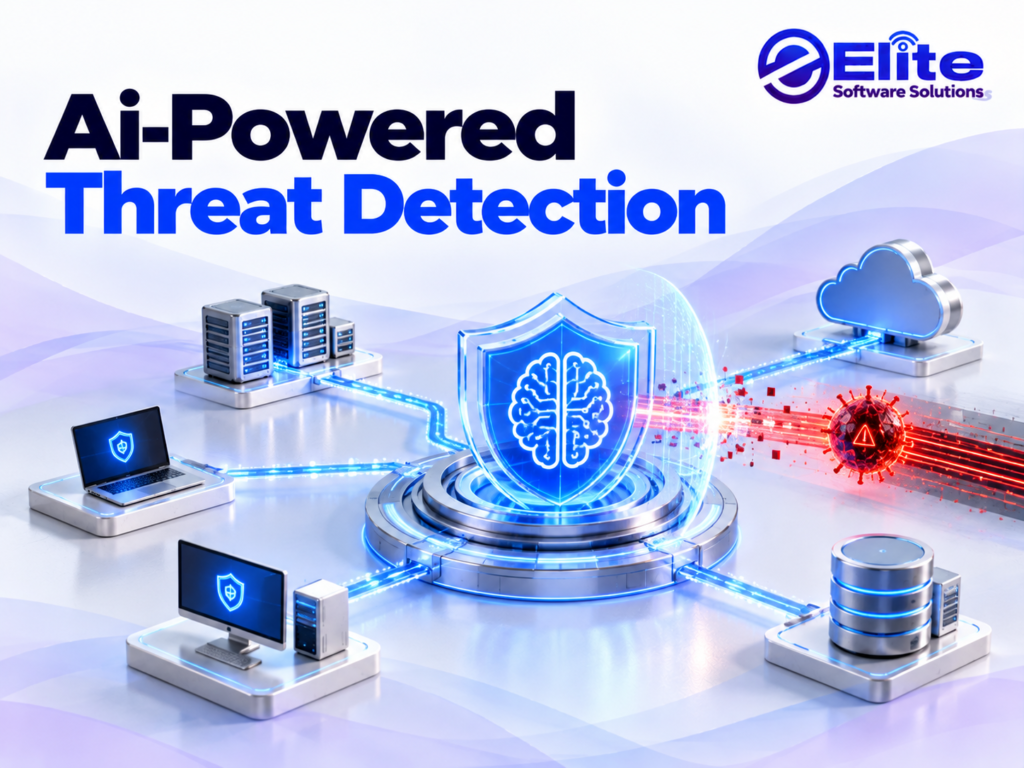
Cybersecurity is becoming more challenging as organizations expand their digital infrastructure, adopt cloud platforms, connect business applications, and face increasingly sophisticated cyber threats. Traditional security tools remain essential, but identifying suspicious activity across large volumes of data can be difficult when attackers use automation, compromised credentials, and rapidly changing techniques.
Artificial intelligence is transforming how security teams detect threats, investigate alerts, and respond to potential attacks. AI-powered cybersecurity tools can analyze network traffic, identify unusual user behavior, correlate security events, and help analysts prioritize incidents that require immediate attention.
In 2026, organizations are exploring AI-driven security operations, behavioral analytics, automated investigation, and intelligent threat intelligence to strengthen their defenses. These technologies can improve security workflows when supported by reliable data, appropriate safeguards, and experienced professionals. However, AI does not eliminate false positives, guarantee accurate threat identification, or replace strong cybersecurity fundamentals.
This guide explains how AI cybersecurity tools work, the major categories businesses should understand, the benefits and limitations of AI-powered threat detection, and the best practices organizations can follow when implementing these technologies.
What Are AI Cybersecurity Tools?
AI cybersecurity tools are software solutions that use artificial intelligence, machine learning, behavioral analytics, and related technologies to help identify, investigate, prevent, or respond to cyber threats.
Traditional security systems often depend on predefined rules, known attack signatures, and established indicators of compromise. These techniques remain valuable for detecting recognized threats, but they may be less effective when malicious activity differs from documented patterns or appears across multiple systems.
AI-powered tools can analyze patterns across network traffic, endpoint activity, authentication events, application logs, cloud workloads, and other security data. Depending on the platform, they may identify unusual behavior, correlate events that appear unrelated, summarize investigation findings, or recommend response actions.
For example, a security platform might detect that an employee account has logged in from an unusual location, accessed an unexpected volume of sensitive files, and attempted to connect to unfamiliar systems. By correlating these signals, the platform can help analysts investigate a potentially compromised account more effectively than examining each alert in isolation.
AI cybersecurity tools differ in their capabilities. Some use conventional machine learning to classify events or identify anomalies, while others incorporate generative AI to summarize incidents and explain findings in natural language. Agentic AI systems can go further by coordinating multi-step security workflows or invoking approved tools under defined permissions.
The value of these technologies depends on the quality of their data, the relevance of their detections, the security of their integrations, and the controls governing automated actions.
Types of AI Cybersecurity Tools Transforming Threat Detection
AI is not a single cybersecurity technology. It is being integrated into different security categories, each addressing particular threats and operational needs. Understanding these categories helps organizations identify where AI can strengthen their existing security architecture.
AI-Powered Security Information and Event Management
Security Information and Event Management (SIEM) platforms collect and analyze security logs from applications, endpoints, networks, identity systems, and cloud environments. AI-enhanced SIEM capabilities can help correlate events, identify unusual activity, prioritize alerts, and provide context for investigations.
An isolated failed login may be harmless. However, when combined with suspicious privilege changes, unusual file access, and connections to unfamiliar infrastructure, it may indicate a coordinated attack. AI-assisted correlation can help analysts examine these events as part of a broader incident.
Extended Detection and Response Platforms
Extended Detection and Response (XDR) platforms connect security telemetry across endpoints, identities, email, networks, and cloud workloads. AI can help identify relationships between events across these domains and assemble a more complete picture of an attack.
This is useful when attackers move between systems using legitimate credentials or exploit multiple entry points. Instead of examining each event separately, security teams can investigate a connected sequence of suspicious activities.
Endpoint Detection and Response Tools
Endpoint Detection and Response (EDR) tools monitor devices such as laptops, servers, and workstations for suspicious processes, unusual behavior, and potential malware activity. AI and machine learning can help identify anomalous execution patterns, suspicious process relationships, and activity that differs from expected behavior.
These tools support investigations into ransomware, credential theft, malicious scripts, and other endpoint threats. Their effectiveness still depends on telemetry quality, detection configuration, and the ability to distinguish legitimate administrative activity from malicious behavior.
Network Detection and Response Tools
Network Detection and Response (NDR) solutions analyze network communications to identify suspicious connections, unusual traffic patterns, and potential lateral movement. AI-based analytics can help establish behavioral baselines and identify deviations that warrant investigation.
For example, an internal server that suddenly communicates with unfamiliar external destinations or accesses systems outside its normal role may require closer examination. Network-level visibility can reveal activity that endpoint-only monitoring might miss.
AI-Powered Threat Intelligence Platforms
Threat intelligence platforms collect and analyze information about malicious infrastructure, attacker techniques, vulnerabilities, and emerging campaigns. AI can help summarize reports, extract indicators, connect related observations, and prioritize intelligence relevant to an organization’s environment.
This can reduce the manual effort involved in reviewing large volumes of threat information. Analysts must still validate the reliability, freshness, and context of intelligence before using it to block traffic or make high-impact security decisions.
AI-Assisted Security Operations Platforms
Security operations platforms increasingly incorporate generative AI and agentic capabilities to support alert triage, investigation, threat hunting, and response coordination.
For example, Microsoft Security Copilot supports security and IT workflows with AI-generated insights and recommendations. Google Security Operations also offers AI capabilities designed to assist with threat investigation and related security tasks. These developments illustrate how AI is moving beyond summarizing alerts toward supporting more complex security workflows.
The important distinction is the level of authority granted to the system. An AI assistant may recommend an action, while an agentic system may execute approved steps through connected tools. Organizations should evaluate these capabilities separately and ensure that automated actions remain subject to appropriate access controls and oversight.
How Artificial Intelligence Is Transforming Threat Detection
AI is changing threat detection by helping security teams analyze larger volumes of telemetry, recognize patterns across systems, and investigate suspicious activity with greater context. Its contribution is most valuable when it complements reliable security data and established detection controls.
Behavioral Analytics and Anomaly Detection
Machine learning models can learn patterns in user, device, and application activity and identify deviations that may indicate compromise. Examples include unusual login times, unexpected data access, abnormal network connections, or changes in administrative behavior.
Not every anomaly is malicious. An employee may travel, change responsibilities, or access a new system for legitimate reasons. AI-based detections should therefore consider context and risk rather than treating every deviation as a confirmed incident.
Correlating Signals Across Security Systems
Attackers often generate multiple signals across identity systems, endpoints, cloud services, and applications. Individually, these signals may appear low risk, but together they can reveal a suspicious sequence.
AI-assisted analytics can help connect these events, identify common entities, and organize evidence into a coherent investigation. This enables analysts to evaluate the broader attack pattern instead of manually reconstructing every relationship.
Detecting Previously Unrecognized Patterns
Signature-based tools remain important for identifying known threats, but they may not recognize every variation of malicious behavior. AI-based analytics can identify unusual patterns even when an exact signature is unavailable.
This does not mean AI can reliably detect every zero-day vulnerability or unknown attack. Detection still depends on observable signals, the model’s limitations, and the quality of the surrounding security controls.
Prioritizing Alerts by Context and Risk
Security teams receive alerts from many systems, and not every alert requires the same level of urgency. AI can help combine factors such as asset criticality, account privileges, threat intelligence, and observed behavior to prioritize investigations.
A suspicious event involving a privileged account and a critical production system may deserve more immediate attention than an isolated anomaly on a low-risk device. Analysts should be able to inspect the evidence behind these priorities rather than relying on unexplained risk scores.
Supporting Faster Investigation and Response
Generative AI can summarize incident timelines, explain technical findings, draft investigation queries, and recommend next steps. Agentic systems may also coordinate approved investigative actions across connected tools.
These capabilities can reduce repetitive work, but response decisions should remain proportionate to risk. Actions such as isolating a production server, disabling an administrator account, or blocking a business-critical service may require human approval and a recovery plan.
Examples of AI Cybersecurity Tools Businesses Can Evaluate in 2026
Choosing a cybersecurity platform requires matching its capabilities to the organization’s existing infrastructure, threat model, and operational requirements. The following products represent different approaches to AI-assisted detection and investigation rather than a universal ranking.
Microsoft Security Copilot
Microsoft Security Copilot supports security and IT teams with AI-assisted investigation, threat intelligence, incident response, and security operations. Its integrations with Microsoft’s security ecosystem can help organizations that already use products such as Microsoft Defender, Microsoft Sentinel, Microsoft Entra, and Microsoft Intune.
Businesses evaluating this platform should examine integration coverage, data permissions, investigation quality, operational costs, and the controls available for automated actions. Feature availability and licensing should be verified through the official Microsoft Security Copilot documentation.
Google Security Operations
Google Security Operations combines security analytics and investigation workflows with AI capabilities. Its features are intended to help security teams examine threats, investigate suspicious activity, and improve detection engineering.
This approach may suit organizations seeking to connect threat investigation, detection development, and security data analysis within their operations. Evaluation should include integration coverage, data requirements, deployment considerations, and the maturity of the specific features being considered.
CrowdStrike Falcon and Charlotte AI
CrowdStrike’s security ecosystem combines endpoint protection and broader security telemetry with AI-assisted investigation and response capabilities. Charlotte AI is designed to help security teams analyze activity and work through security operations tasks.
Organizations considering this approach should assess endpoint visibility, identity and cloud integrations, investigation workflows, response permissions, and how well the platform fits their existing security architecture.
SentinelOne Singularity and Purple AI
SentinelOne offers security capabilities across endpoint protection and related security operations, with Purple AI supporting AI-assisted investigation and threat hunting. These capabilities can help analysts explore telemetry, interpret detections, and investigate potential threats.
A practical assessment should examine detection coverage, investigation quality, integrations with existing systems, and the safeguards available before response actions are executed.
Darktrace
Darktrace applies behavioral analytics and machine learning across cybersecurity environments, including network security. Its approach focuses on identifying patterns that differ from established behavior and supporting the investigation of potentially suspicious activity.
Organizations should determine whether its visibility and detection methods suit their infrastructure, particularly where unusual activity may also arise from legitimate business changes.
Snyk
Snyk focuses on developer and application security, including identifying vulnerabilities in software dependencies, source code, containers, and related components. This category is particularly relevant as AI-assisted software development increases the need to review generated code and third-party packages before applications reach production.
Businesses should consider how well the platform integrates with their repositories, development workflows, CI/CD pipelines, and vulnerability remediation processes.
Product capabilities and availability change over time. Organizations should verify current feature support, licensing, deployment options, and integration requirements directly with vendors before making purchasing decisions.
Benefits of AI Cybersecurity Tools for Businesses
Faster Threat Detection and Investigation
AI can help security teams identify suspicious relationships across large volumes of security events and organize relevant evidence for investigation. This can reduce manual analysis in suitable workflows and help analysts focus on incidents that require deeper attention.
Actual improvements depend on data quality, system integration, detection configuration, and the complexity of the environment. Businesses should measure outcomes rather than assume that introducing AI automatically makes every investigation faster.
Improved Visibility Across Digital Environments
Organizations often use separate tools to monitor endpoints, identities, cloud workloads, networks, and applications. AI-assisted analytics can help connect signals from these sources, providing a broader view of potential attacks.
This is particularly valuable when suspicious activity crosses system boundaries or involves compromised accounts and legitimate administrative tools.
More Efficient Security Operations
AI can assist with repetitive tasks such as summarizing alerts, enriching incident records, drafting queries, and preparing investigation reports. These capabilities can help reduce administrative work and make security expertise more accessible to teams that lack large numbers of specialized analysts.
However, automated summaries and recommendations still require validation, especially when they influence incident severity or remediation decisions.
Proactive Threat Hunting
AI can help analysts explore security telemetry, identify unusual patterns, and investigate hypotheses about potential attacker behavior. Instead of relying entirely on known indicators, teams can use these insights to examine suspicious activity that has not yet generated a conventional alert.
Effective threat hunting still requires a clear hypothesis, reliable evidence, and skilled interpretation of results.
Better Support for Security Decision-Making
AI can bring together technical findings, asset information, threat intelligence, and business context to support risk assessment. This can help security leaders understand which incidents may affect critical systems and where additional investigation or remediation is necessary.
AI should inform these decisions rather than replace accountability for risk acceptance, business continuity, and incident response.
Challenges and Limitations of AI in Cybersecurity
Despite its potential, AI is not a complete solution to modern cyber threats. Organizations need to understand its limitations before relying on automated detection or response.
False Positives and Missed Threats
AI models may flag legitimate activity as suspicious or fail to recognize malicious behavior. Poorly configured detections can overwhelm analysts with unnecessary alerts, while overly aggressive filtering may hide genuine threats.
Organizations should evaluate detection precision, recall, investigation outcomes, and the operational impact of false alerts. Detection thresholds should be tuned to the environment and periodically reassessed as behavior changes.
Data Quality and Visibility Gaps
AI-powered detection depends on the information available to it. Incomplete endpoint telemetry, inconsistent logs, missing identity events, and poorly integrated systems can prevent the platform from recognizing important attack patterns.
Before investing in advanced AI features, businesses should ensure that critical assets are monitored, log collection is reliable, and relevant data sources are connected appropriately.
Adversarial Manipulation and AI-Specific Risks
Attackers may attempt to evade detection, manipulate model inputs, exploit weaknesses in AI integrations, or misuse legitimate automation. Systems that use autonomous agents also face risks involving excessive permissions, prompt injection, and unintended tool execution.
Organizations should test AI-enabled security workflows against realistic attack scenarios, isolate sensitive execution environments, and enforce authorization outside the model.
For a deeper discussion of these risks, read Agentic AI Security: Risks & Governance for Enterprises. This related article examines how prompt injection, excessive permissions, tool misuse, and governance weaknesses can affect autonomous AI systems. Its recommendations are particularly relevant when cybersecurity platforms use AI agents to investigate threats or execute response actions.
Privacy and Regulatory Considerations
Security telemetry may contain personal information, confidential business records, authentication details, or other sensitive data. Sending this information to an AI service without appropriate controls can create additional privacy and compliance risks.
Businesses should assess data residency, retention, encryption, access permissions, vendor processing terms, and applicable regulatory requirements. They should also prevent sensitive information from being unnecessarily included in prompts, investigation summaries, and logs.
Cost and Integration Complexity
AI cybersecurity tools may require additional licensing, computing resources, integration work, staff training, and ongoing evaluation. Deploying several overlapping platforms can increase complexity without delivering proportional improvements.
Organizations should assess the total cost of ownership and prioritize capabilities that address specific security gaps. A targeted improvement to existing monitoring may be more valuable than introducing a new platform with capabilities the team cannot effectively operate.
Overreliance on Automated Decisions
An AI system may produce a convincing but incorrect explanation or recommend a response that disrupts legitimate operations. This is especially important when a platform can isolate devices, disable accounts, change access policies, or modify production systems.
Automated actions should be limited by risk, with clear approval requirements, audit trails, and recovery procedures. Security teams should retain the ability to challenge recommendations and reverse actions where possible.
How to Implement AI Cybersecurity Tools Effectively
Successful adoption begins with a clearly defined security problem rather than the desire to use AI for its own sake.
Assess Existing Security Capabilities
Organizations should review their current security architecture, incident history, monitoring coverage, response procedures, and operational bottlenecks. This assessment helps identify whether AI could improve alert correlation, endpoint monitoring, threat hunting, investigation, or another specific function.
The objective is to establish a baseline against which improvements can be measured.
Select Tools That Fit the Environment
Tool selection should reflect the organization’s infrastructure, existing vendors, threat profile, data requirements, staffing, and budget. A company with a mature security operations center may prioritize investigation automation, while a smaller business may benefit more from managed detection and response with AI-supported analytics.
Integration quality and operational usability matter as much as the sophistication of a model.
Establish Data and Access Controls
Before connecting AI to production security systems, define which information it can retrieve, which tools it can invoke, and which actions it may perform. Use least-privilege permissions and separate investigation capabilities from high-impact response operations.
Sensitive data should be protected through appropriate access controls, retention policies, and secure handling procedures.
Test Detection and Response Workflows
Evaluate the platform using realistic scenarios that reflect the organization’s threats. Testing may include suspicious authentication, malware-like behavior, unusual data access, privilege escalation, and activity across multiple systems.
Measure whether the system identifies the scenario, explains its findings accurately, and recommends an appropriate response. Where automated actions are enabled, verify that approval gates and recovery mechanisms work as intended.
Deploy Gradually and Monitor Performance
Start with a limited set of workflows, compare results with existing detection processes, and collect feedback from analysts. Expand automation only after the organization has sufficient evidence that the system performs reliably and that its actions remain within approved boundaries.
Ongoing monitoring should examine detection quality, false positives, missed incidents, response outcomes, system costs, and changes in the operating environment.
Train Security Teams and Assign Ownership
AI tools change how analysts investigate incidents and interact with security systems. Teams need training on interpreting model outputs, validating evidence, identifying automation risks, and escalating uncertain findings.
Clear ownership should be established for platform configuration, model evaluation, access management, incident response, and ongoing governance. AI should strengthen the security team’s capabilities rather than create an unmonitored layer of decision-making.
How AI Agent Development Services Can Support Cybersecurity
As security operations become more complex, some organizations are exploring AI agents to coordinate investigations, gather threat intelligence, enrich alerts, and support incident response. These systems can connect approved security tools and perform multi-step tasks, reducing repetitive work while helping analysts understand suspicious activity.
Working with a provider of ai agent development services can help businesses design AI-driven workflows around their security requirements. For example, a purpose-built agent could collect information about a suspicious login, retrieve relevant endpoint alerts, summarize the evidence, and prepare a recommended response for an analyst to review.
The important consideration is how these agents are designed and governed. They should use narrowly scoped permissions, validate information from connected tools, maintain auditable records, and require appropriate approval before executing high-impact actions. Security teams should also be able to suspend an agent or revoke its access if unexpected behavior occurs.
Organizations should evaluate whether a custom agent addresses a genuine operational gap rather than introducing additional complexity. In some cases, the built-in AI capabilities of an existing security platform may be sufficient. Custom development is most useful when specific workflows, integrations, or business requirements cannot be addressed effectively through available tools.
The Future of AI-Powered Threat Detection
AI-powered cybersecurity is moving toward more connected, context-aware, and increasingly automated security operations. Advances in agentic systems are creating opportunities to coordinate investigation tasks, develop detection logic, and execute approved response workflows across multiple security tools.
These developments illustrate a broader shift from systems that simply generate alerts toward systems that can help investigate threats and support defensive action. However, greater automation also makes access control, verification, monitoring, and accountability more important.
AI can also strengthen offensive capabilities by helping attackers analyze software, automate parts of attack campaigns, and adapt their methods. Organizations must therefore improve defensive readiness alongside AI adoption.
The next stage of cybersecurity will depend on more than model capability. Businesses will need high-quality security telemetry, interoperable systems, carefully controlled automation, transparent evidence, and effective human oversight. The most valuable tools will be those that improve measurable security outcomes without introducing unacceptable operational risk.
Conclusion
AI cybersecurity tools are transforming threat detection by helping organizations identify unusual behavior, correlate events across systems, prioritize alerts, and investigate incidents with greater context. SIEM, XDR, EDR, NDR, threat intelligence, and AI-assisted security operations platforms each contribute to different parts of the defensive process.
However, AI cannot guarantee that every attack will be detected or every response will be correct. False positives, data gaps, integration complexity, privacy concerns, and adversarial manipulation remain important challenges.
Businesses should begin with defined security objectives, select tools that fit their existing environment, validate detection quality, and enforce clear boundaries around automated actions. With reliable data, continuous evaluation, and accountable human oversight, AI can become a valuable part of a broader cybersecurity strategy.
Frequently Asked Questions
What Are AI Cybersecurity Tools?
AI cybersecurity tools use machine learning, behavioral analytics, generative AI, or related techniques to help identify threats, investigate suspicious activity, prioritize alerts, and support incident response. They can operate across endpoints, networks, cloud environments, identities, applications, and security operations workflows.
How Does AI Improve Threat Detection?
AI can analyze large volumes of security telemetry, identify unusual behavior, correlate related events, and help analysts investigate potential attacks. Its effectiveness depends on the quality of the available data, detection configuration, and validation of its findings.
Which AI Cybersecurity Tools Should Businesses Consider in 2026?
Businesses can evaluate Microsoft Security Copilot, Google Security Operations, CrowdStrike Falcon with Charlotte AI, SentinelOne Singularity with Purple AI, Darktrace, and Snyk. These products serve different security needs, so the appropriate choice depends on infrastructure, detection requirements, integrations, budget, and operational maturity.
Can AI Cybersecurity Tools Replace Human Security Analysts?
No. AI can automate repetitive tasks and support investigations, but human expertise remains important for validating findings, assessing business impact, handling ambiguous incidents, and approving consequential actions. AI is most useful when it strengthens a well-managed security operation.
What Are the Main Limitations of AI-Powered Threat Detection?
Important limitations include false positives, missed threats, incomplete telemetry, adversarial manipulation, privacy concerns, integration costs, and inaccurate recommendations. Organizations should test tools against realistic scenarios and monitor performance continuously.
Are AI Cybersecurity Tools Suitable for Small Businesses?
Yes. Small businesses can benefit from AI-assisted detection and managed security services, particularly when they lack a dedicated security operations team. The best solution should match their budget, existing technology, support requirements, and ability to respond to detected incidents.
How Can AI Agents Support Cybersecurity Operations?
AI agents can coordinate multi-step tasks such as gathering threat intelligence, investigating alerts, enriching incident records, and recommending remediation. Their access to security tools should be restricted, and high-impact actions should require appropriate authorization.
What Should Businesses Evaluate Before Adopting AI Cybersecurity Tools?
Businesses should assess detection accuracy, data coverage, integration compatibility, privacy protections, licensing costs, auditability, and response controls. A pilot deployment with measurable objectives can help determine whether a platform improves security outcomes before a broader rollout.